8 Hidden Nashville Hiking Trails That Locals Love (Plus Secret Photo Spots)

Updated: Apr 16
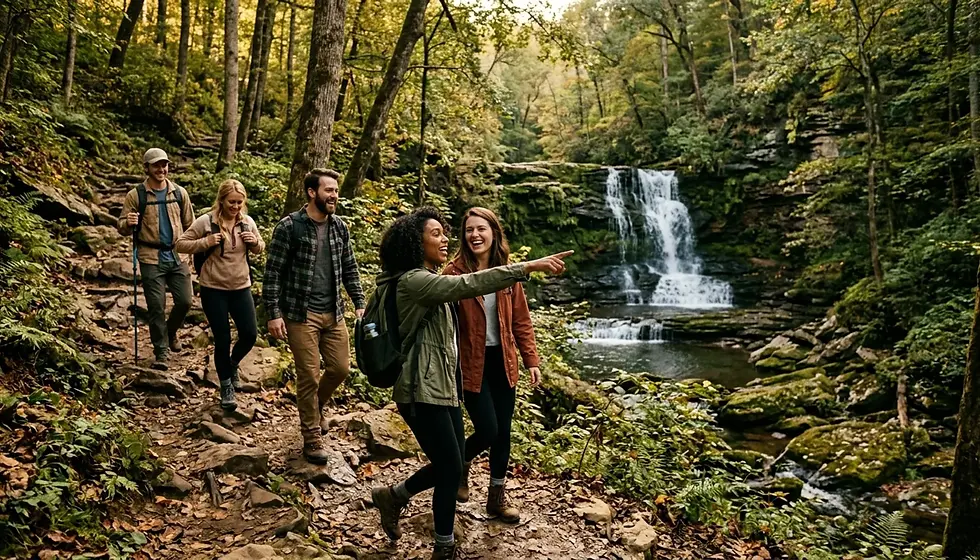
The best hiking trails near Nashville, Tennessee aren't the crowded ones everyone talks about. Eight lesser-known trails within 30 minutes of downtown offer waterfalls, scenic overlooks, and the kind of solitude that makes you forget you're minutes from Music City. From the tunnel hike at Pattison Forge to the wildflower meadows of Beaman Park's new Laurel Woods Loop, these trails reward those willing to venture beyond the obvious choices.
TL;DR: Nashville's Best Hidden Hiking Gems
Pattison Forge Tunnel Trail: 1-mile hike to America's first full-scale tunnel, with swimming holes
Mossy Ridge Trail waterfall: 4.9-mile challenge with a secret cascade at Warner Park
Laurel Woods Loop: Brand new 12-mile trail at Beaman Park (6-mile shortcut available)
Hidden Lake Trail: 2-mile loop around a former massive swimming pool site
Ganier Ridge extension: Add 1.65 miles to Radnor Lake for elevated city views
Best photography spots: Bluff Overlook tunnel entrance and Hidden Lake dam ruins
Nashville's hiking scene extends far beyond Percy Warner Park's main trails. While most visitors stick to the well-marked paths, savvy locals know where to find rushing streams, abandoned historical sites, and overlooks that frame the city skyline without the crowds.
The Metro Parks system includes over 100 miles of trails across 14 locations, but only a handful get regular attention. These eight hidden gems offer everything from geological wonders to Civil War history, all within a 30-minute drive of downtown Broadway. Whether you're planning your Nashville adventure or looking for Nashville Hidden Gems Locals Recommend What You Need To Know, these trails provide authentic outdoor experiences. For even more outdoor inspiration, browse our guide to Nashville Outdoor Activities Your Complete Guide To Music City S Nature.
What Makes These Trails Different from Nashville's Popular Hikes?
Unlike the heavily trafficked Radnor Lake loop or the busy Warner Park main trails, these hidden spots typically see fewer than 20 hikers on weekdays. Most lack the prominent trailhead signage and paved parking areas that draw weekend crowds.
The difference starts with access. Instead of obvious entrance gates, you'll find gravel pull-offs, unmarked dirt paths, or trailheads tucked behind maintenance buildings. Several require brief road walks or creek crossings that deter casual hikers.
These trails also showcase Nashville's diverse geology in ways the popular hikes don't. You'll encounter limestone caves, natural springs, and rock formations that predate the city by millions of years. The variety spans from creek-level walks to ridge-top climbs with 300-foot elevation changes.

Historical Significance Beyond Nature
Four of these trails incorporate significant historical elements. Pattison Forge features America's first full-scale tunnel, built in 1819 for river navigation. Hidden Lake surrounds the remnants of what was once marketed as the world's largest swimming pool in the 1920s.
The Civil War left its mark here too. Beaman Park's new trail system passes through areas where Union and Confederate forces established camps, while the Harpeth River sites played roles in the region's iron industry that fueled both armies.
Where Are the Best Secret Waterfalls and Swimming Holes?
The Mossy Ridge Trail at Warner Park hides its waterfall well. Most hikers tackle this challenging 4.9-mile loop (locally nicknamed the "Buttkicker Trail") for the workout, but at mile 2.7, a small cascade tumbles over a 15-foot limestone ledge into a clear pool.
To find it, watch for the creek crossing where the trail briefly follows the streambed. Instead of immediately climbing back up the bank, follow the water upstream for 200 yards. The waterfall sits in a natural amphitheater of moss-covered rocks, completely hidden from the main trail.
Pattison Forge offers the most accessible swimming. The tunnel hike leads to deep pools carved by the Harpeth River's constant flow. Water temperatures stay cool even in July, rarely exceeding 70 degrees. The swimming area extends both upstream and downstream from the tunnel entrance.
Access Pattison Forge at 1254 Narrows of the Harpeth Road in Kingston Springs. Park in the small gravel lot and follow the obvious path toward the river. The 1-mile hike is mostly flat with two creek crossings that require rock-hopping during high water. For a detailed breakdown of the park and surrounding area, see our guide to Percy Warner Park Nashville How To Hike The Most Scenic Trails Just Minutes From Downtown.

Swimming Safety and Water Quality
These natural swimming spots require more caution than public pools. The Harpeth River can rise quickly after storms, creating dangerous currents near the tunnel entrance. Check recent rainfall before visiting, and avoid swimming if the water appears muddy or moves unusually fast.
Both locations maintain good water quality during normal conditions. The limestone bedrock naturally filters runoff, but avoid swimming within 24 hours of heavy rain when agricultural and urban runoff peaks.
Which Trails Offer the Best Photography and Instagram Spots?
The Bluff Overlook at Pattison Forge provides the most dramatic shot, framing the tunnel entrance against towering limestone cliffs. This 1/3-mile climb gains 200 feet of elevation quickly, but rewards photographers with a bird's-eye view of the Harpeth River bend.
Time your visit for late afternoon when western light illuminates the cliff face while the tunnel mouth stays in shadow, creating natural contrast. The overlook also captures the river's S-curve with the tunnel as a focal point.
Hidden Lake offers a different aesthetic entirely. The concrete dam remnants and ruins of the former pool complex create an abandoned industrial vibe that's rare in Nashville's typically natural settings. The best compositions include the curved dam wall with wildflowers in the foreground during spring and early summer.
For skyline shots, Ganier Ridge's southern section provides unobstructed views toward downtown Nashville. This 1.65-mile extension to the standard Radnor Lake hike climbs 300 feet above the lake level, offering clear sightlines to the city 8 miles southeast. Pair your hike with a visit to one of the Nashville's hidden gems that locals actually love. For even more ways to explore the city, check out our full list of Things To Do Nashville beyond the trails.
Seasonal Photography Considerations
Spring wildflowers peak in late April at Beaman Park's meadow sections, particularly along the new Laurel Woods Loop. Summer thunderstorms create dramatic skies but can make creek crossings dangerous. Fall colors typically peak in mid-October, with Ganier Ridge offering the best elevated views of the changing canopy.
Winter photography works best at the limestone features, where bare trees reveal rock formations hidden by summer foliage. The tunnel at Pattison Forge maintains consistent lighting year-round, making it reliable for any season.
How Difficult Are These Hidden Trails Compared to Popular Nashville Hikes?
These trails span a wider difficulty range than Nashville's well-known options. The easiest, Hidden Lake Trail, covers 2 miles on mostly flat terrain around the former swimming pool site. Families with elementary-age children regularly complete this loop in under 90 minutes. For more ideas on enjoying Nashville with kids, see our guide to Family Activities In Nashville 20 Fun Things To Do With Kids.
At the opposite extreme, the full Laurel Woods Loop at Beaman Park stretches 12 miles with significant elevation changes and several technical sections requiring scrambling over fallen trees and rock outcrops. Even experienced hikers should plan 6-7 hours for completion.
Most fall into the moderate category. The Mossy Ridge Trail's 4.9-mile distance and rolling terrain compare closely to Radnor Lake's 3.2-mile loop, but with more elevation gain. Pattison Forge's 1-mile distance seems easy until you factor in the creek crossings and uneven riverside terrain.

Trail Conditions and Maintenance Levels
Unlike Nashville's premier trails with regular maintenance crews, these hidden gems receive sporadic upkeep. Expect fallen trees across paths, overgrown sections during summer, and minimal trail blazing. Most rely on worn footpaths rather than constructed treadways.
The Laurel Woods Loop represents an exception as Beaman Park's newest addition. Opened in 2026, it features proper trail markers, constructed bridges over streams, and regular maintenance. However, its 6-mile shortcut option uses older paths with typical maintenance challenges.
What Should You Know About Trail Access and Parking?
Beaman Park offers the most conventional setup with a nature center, restrooms, and marked trailheads. Contact the nature center at 615-862-8580 for current trail conditions and maps.
Pattison Forge provides only a small gravel pullout that holds 6-8 cars maximum. Arrive before 10am on weekends to guarantee a spot, or plan weekday visits when parking pressure drops significantly.
The Ganier Ridge trailhead requires the most local knowledge. Instead of parking at Radnor Lake's main visitor center, use the official trail map to locate the southern access point off Old Hickory Boulevard. This lesser-known entrance provides direct access to the ridge without walking the busy lake perimeter first.
Public Transportation and Rideshare Access
None of these hidden trails offer realistic public transit access. Nashville's WeGo bus system doesn't serve the remote trailheads, and rideshare pickup from trail endpoints can be unreliable due to poor cell coverage in several locations.
Visitors looking for the best places to stay in Nashville for large groups will find the luxury amenities at Underwood Manor perfectly positioned for hiking adventures, just 15 minutes from Percy Warner Park's hidden trails. The property's central location provides quick access to multiple hiking spots without lengthy commutes. For more on where to base your trip, explore our Where To Stay Nashville resources.
When Is the Best Time to Hike These Trails?
Early morning offers the best experience on all eight trails. Arrive by 7am during peak season (March through October) to avoid crowds and enjoy cooler temperatures. Most hidden spots see their heaviest use between 10am and 2pm on weekends.
Seasonal timing affects each trail differently. Spring (April through May) brings wildflowers and flowing streams, but also increased tick activity and occasional flooding after storms. Summer heat makes the longer trails challenging between 11am and 4pm.
Fall provides ideal conditions from late September through early November. Temperatures moderate, insect activity drops, and deciduous trees reveal long-distance views obscured by summer foliage. However, hunting season requires caution at some locations. For guidance on timing your overall Nashville trip, see our resource on Best Time Of Year To Visit Nashville Tn For Your Trip. Whether you're planning a Nashville Trip Planning getaway or a quick escape, knowing the right season makes all the difference.
Weather and Safety Considerations
Nashville's climate creates specific challenges for these lesser-maintained trails. Summer thunderstorms develop quickly, creating flash flood risks in the Harpeth River areas. Always check recent weather before visiting creek-level trails.
Winter ice poses serious hazards on the limestone sections, particularly Bluff Overlook's steep climb. These trails receive minimal winter treatment, so postpone visits during freezing conditions unless you have proper traction devices.
Cell phone coverage varies significantly. Beaman Park and the Warner Park areas maintain reasonable signals, but several Harpeth River locations have dead zones. Download offline maps before departing, and inform someone of your hiking plans.
What Gear Do You Need for Nashville's Hidden Trails?
Unlike Nashville's maintained park trails where running shoes suffice, these hidden gems require more thoughtful gear selection. Hiking boots with ankle support become essential for the uneven terrain and creek crossings found on most routes.
Water-resistant footwear matters more than on typical Nashville hikes. Four trails involve creek crossings or marshy sections where waterproof boots prevent soggy socks and potential foot problems. Quick-dry hiking pants also prove valuable during wet conditions.
Navigation tools gain importance when official trail markers disappear. Download the AllTrails app with offline maps for backup navigation, even though cell coverage drops in several locations.
Seasonal Gear Adjustments
Spring requires insect protection more than on Nashville's breezy lake trails. Pack effective insect repellent containing DEET, and consider lightweight long sleeves for dawn and dusk hiking when mosquito activity peaks.
Summer heat management becomes critical on the longer trails. Bring 50% more water than you'd pack for equivalent distances at places like Radnor Lake, where shade and breeze moderate temperatures. Electrolyte replacement also matters more on these exposed ridge sections.
Winter hiking demands layers and traction devices. The limestone surfaces become slippery when wet, and several trails cross north-facing slopes that hold ice longer than expected.
How Do These Trails Connect to Nashville's Larger Trail Network?
The Harpeth River State Park system creates connections between several of these hidden spots. Official state park maps show linkages between Pattison Forge, Hidden Lake Trail, and other river access points through a combination of hiking paths and quiet country roads.
Advanced hikers can create custom long-distance routes by connecting multiple locations. A popular 15-mile challenge links Warner Park's Mossy Ridge Trail with Beaman Park's system via residential streets and greenway connections, though this requires careful route planning and multiple trailhead logistics.
The Cumberland River Bicentennial Trail provides future connectivity potential. As Nashville expands this system, several of these hidden hiking areas may gain formal trail connections to downtown and other major parks.
Planning Multi-Trail Adventures
Combining 2-3 shorter hidden trails makes excellent full-day adventures. Pair Pattison Forge's 1-mile tunnel hike with Hidden Lake's 2-mile loop for a manageable morning that covers diverse scenery and historical sites.
For serious hikers, the Ganier Ridge extension combined with Warner Park's back-country trails creates 8+ mile days with significant elevation gain and variety. This combination works best during cooler months when sustained effort feels comfortable. For more outdoor ideas, explore our guide to 7 Off The Beaten Path Nashville Adventures For 2025 for activity inspiration. You can also browse our Things To Do In Nashville category for even more ways to explore the city.
Is Nashville Good for Year-Round Hiking Safety?
Nashville's moderate climate allows year-round hiking, but these hidden trails present different safety considerations than the city's well-maintained park systems. Winter ice on limestone surfaces creates the most serious hazard, particularly on Bluff Overlook's steep sections.
Summer heat becomes dangerous on the longer trails where shade coverage varies. The new Laurel Woods Loop includes several exposed meadow sections where temperatures can exceed 95°F with high humidity typical of Tennessee summers.
Flash flooding poses the greatest weather-related risk. The Harpeth River can rise 3-4 feet within hours during storms, making creek crossings at Pattison Forge potentially deadly. Never attempt water crossings if the creek appears muddy, sounds unusually loud, or carries debris.
Wildlife Encounters and Precautions
Tennessee's wildlife rarely poses serious threats, but awareness helps prevent problems. Black bears occasionally appear in the more remote sections of Beaman Park, particularly near streams during drought conditions when water sources concentrate.
Venomous snakes including copperheads and timber rattlesnakes inhabit rocky areas throughout the region. They're most active during warm weather and typically avoid human contact, but watch foot placement when scrambling over rocks or logs.
Tick-borne illness prevention becomes crucial during warm months. These lesser-traveled trails often involve brushing against vegetation where ticks wait for hosts. Perform thorough tick checks within 24 hours of hiking, particularly around ankles, waistlines, and hairlines.
What Are the Best Photography Spots Along Each Trail?
Each hidden trail offers distinct photographic opportunities that differ from Nashville's typical nature photography. The tunnel entrance at Pattison Forge creates dramatic framing possibilities, with the dark tunnel mouth contrasting against bright limestone cliffs and flowing water.
Position yourself on the opposite riverbank during late morning when sunlight illuminates the cliff face while keeping the tunnel in shadow. Include the river's reflection for foreground interest, and use a polarizing filter to reduce glare from wet limestone surfaces.
Hidden Lake's concrete ruins provide Nashville's most unique abandoned industrial aesthetic. The curved dam structure works best in compositions that emphasize its geometric lines against the organic shapes of surrounding vegetation.
Spring wildflowers create excellent foreground elements when photographing the dam ruins. Position the camera low to include colorful blooms in the immediate foreground while keeping the concrete structures as background elements. For Insta-worthy Nashville stay ideas, check out our guide to Nashville Airbnb With Photo Ops Insta Worthy Decor Best Stays For Groups, perfect for groups on hiking getaways.
Seasonal Light and Timing Considerations
Ganier Ridge overlooks capture downtown Nashville's skyline most effectively during blue hour, 30-45 minutes after sunset. The city lights begin appearing while enough ambient light remains to show landscape details.
Winter offers the clearest skyline views when bare trees no longer obstruct sightlines. However, shorter daylight hours require careful timing to reach the overlook and return safely before dark.
The Mossy Ridge waterfall photographs best during spring when water flow peaks and surrounding vegetation shows fresh green growth. Early morning provides the most even lighting in this naturally shaded location. After your hike, explore some of the Hidden Nashville local experiences tourists never find to round out your visit.
Frequently Asked Questions
Where to hike near Nashville, Tennessee for beginners?
Hidden Lake Trail offers the easiest introduction at just 2 miles with minimal elevation gain. The path stays well-defined around the former swimming pool site, making navigation simple for new hikers. Parking is reliable, and the historical ruins provide interesting stops along the way.
Is Nashville good for hiking compared to other cities?
Nashville provides excellent hiking diversity within 30 minutes of downtown, from creek-level walks to ridge-top climbs with city views. The variety of geological features, historical sites, and natural areas exceeds most cities of similar size. However, summer heat and humidity can make conditions challenging compared to mountain or desert destinations. For inspiration on the best time of year to visit Nashville Tennessee, plan your hikes around the most comfortable seasons.
How long is the Mossy Ridge Falls hike?
The complete Mossy Ridge Trail measures 4.9 miles, but reaching the waterfall requires only about 2.7 miles of hiking. Most hikers spend 2-3 hours completing the full loop, including time to explore the waterfall area. The trail gains significant elevation and can be physically demanding.
What is the cute little town outside of Nashville for hiking?
Kingston Springs provides access to several Harpeth River trails including Pattison Forge. This small community 20 minutes west of Nashville offers rural charm with antique shops and local restaurants. The town serves as a convenient base for exploring the river corridor's hiking opportunities.
Do I need hiking boots for Nashville area trails?
These hidden trails require more substantial footwear than Nashville's popular paved paths. Creek crossings, uneven limestone surfaces, and limited maintenance make hiking boots with ankle support essential for safety and comfort. Water-resistant materials help during wet conditions.
Are dogs allowed on these hidden Nashville trails?
Pet policies vary by location. Dogs are prohibited on Radnor Lake trails including the Ganier Ridge extension. Warner Park and Beaman Park allow leashed dogs following Metro Parks regulations requiring leashes no longer than 6 feet. Always check current policies before visiting with pets.
When is the best time to avoid crowds on Nashville hiking trails?
Weekday mornings before 9am offer the most solitude on these hidden trails. Summer weekends see the heaviest use between 10am and 3pm. Late fall through early spring provides the most consistent quiet conditions, though weather can limit access to some creek-crossing trails.
Conclusion
These eight hidden hiking trails near Nashville, Tennessee prove that Music City's natural side extends far beyond the obvious choices. From the engineering marvel of America's first tunnel to the secret waterfall tucked into Warner Park's back country, each trail offers unique rewards for those willing to venture beyond the crowds.
The combination of historical significance, diverse terrain, and genuine solitude makes these spots invaluable for Nashville-area hikers seeking authentic outdoor experiences. Whether you're photographing limestone cliffs at Pattison Forge or climbing to skyline views on Ganier Ridge, these trails provide the kind of memorable adventures that define great hiking destinations.
Start with the easier options like Hidden Lake Trail to build familiarity with these lesser-known areas, then progress to challenges like the full Laurel Woods Loop as your confidence grows. Nashville's hiking scene offers much more than most visitors ever discover, perfect for anyone planning a Your Perfect Weekend In Nashville Itinerary or exploring Top 9 Activities For Your 2025 Spring Break In Nashville Tennessee beyond the beaten path. For a comprehensive overview of everything the city offers, visit our Things To Do Nashville guide to plan your full itinerary. Looking for the ideal Nashville Getaways base after your hikes? Explore our top picks for comfortable group stays near the trails.

After a day exploring Tennessee's hidden trails, Book your stay at The Space for the perfect recovery spot with its 7-person hot tub, Speakeasy Game Room, and fire pit. Located just 15 minutes from Warner Park's trailheads, the property's outdoor amenities complement your hiking adventures perfectly. Whether you're planning a Nashville bachelorette party or simply seeking the Best Vacation Rentals Nashville experience, this location provides the ideal base for your outdoor adventures.


Comments