Is Cumberland Park Worth Visiting in Nashville?


Cumberland Park is worth visiting if you want free riverfront views of downtown Nashville, a genuinely good playground for kids, and a quiet 30 to 45 minute stop rather than an all-day destination. It won't replace a trip to Broadway or the Country Music Hall of Fame, but as a free, low-key add-on to a riverfront walk, it earns its spot on the itinerary.
Cumberland Park sits at 592 S 1st St on the east bank of the Cumberland River, directly across from downtown Nashville and Nissan Stadium.
The park covers 6.5 acres and opened in 2012 as part of Nashville's Riverfront Revitalization Plan.
Admission is free, and parking in the on-site lot is also free unless a special event is scheduled that day.
The sprayground has been closed for multiple seasons and isn't expected to reopen soon, so don't plan a summer trip around it.
Most travel sites rank Cumberland Park in the 90s out of 400-plus Nashville attractions, meaning it's a solid secondary stop, not a headline destination.
You can reach the park on foot from downtown via the John Seigenthaler Pedestrian Bridge, making it an easy 15 to 20 minute walk loop.
If you're weighing Cumberland Park against the dozens of other things competing for time on a Nashville trip in 2026, the honest answer depends on what kind of traveler you are. Families with young kids, dog owners looking for a green space, and photographers chasing a downtown skyline shot get real value here. If you're visiting Music City for three days and your list is Broadway, the Country Music Hall of Fame, and Ryman Auditorium, Cumberland Park is a nice half-hour detour, not a must-see.
This guide breaks down exactly what the park offers, what's changed recently (the sprayground situation especially), how it stacks up against other free things to do in Nashville, and the logistics nobody else bothers to explain, like parking, crowd timing, and how it fits into a broader riverfront walk. If you're staying at a group rental like Underwood Manor just minutes from downtown, this park makes an easy, no-cost stop before or after your Broadway plans.
What Is Cumberland Park and Why Does It Exist?
Cumberland Park is a 6.5-acre public riverfront park on the east bank of the Cumberland River in Nashville, Tennessee, built as the centerpiece of the city's Riverfront Revitalization Plan. The park opened in 2012, transforming a stretch of industrial riverbank across from downtown into a family-oriented green space with playgrounds, an amphitheater, and walking trails.
Specifically, the site sits at 592 S 1st St, directly across the water from downtown Nashville and Nissan Stadium, home of the Tennessee Titans. As a result, the park doubles as one of the better vantage points in the city for skyline photography, especially at golden hour when the AT&T Building (locals call it the Batman Building) catches the light. Additionally, the park connects to the 3.5-mile East Bank Greenway, giving it a functional role beyond just being a pretty stop.
Unlike Centennial Park or Percy Warner Park, which draw crowds for their scale and scenery, Cumberland Park was designed with a narrower purpose: giving downtown workers, tourists, and East Nashville families a walkable green space with river access. That distinction matters when deciding whether it's worth visiting, since it was never meant to compete with Nashville's larger parks.
What to Do at Cumberland Park?
The main activities at Cumberland Park are the children's playground, the riverfront walking trail, the open-air amphitheater, and photography of the downtown skyline. First, the playground features a mini rock climbing wall, a spider climb structure, and climbing ropes, all of which draw consistent praise from parents in reviews as genuinely well-built for a free public park.
Additionally, there's a washboard-style play area for younger kids who aren't ready for the climbing structures yet. For example, families with a toddler and an eight-year-old can each find something age-appropriate without needing two separate stops. The amphitheater hosts occasional shows and events, so it's worth checking the city's parks calendar before you go if live entertainment adds to the appeal.
Notably, the riverfront trail is where Cumberland Park earns most of its "worth it" votes. As of 2026, the walkway offers unobstructed views of the downtown skyline and direct sightlines to Nissan Stadium, making it a favorite for photographers and for anyone who wants a quiet 20-minute walk instead of navigating Broadway's crowds. Alice Aycock's Ghost Ballet sculpture installation adds a piece of public art worth pausing for along the path.

How Much Time Do You Need at Cumberland Park?
Most visitors need 30 to 45 minutes at Cumberland Park, longer if you have kids who want to fully explore the playground or if you plan to walk the connecting greenway trail. A quick photo stop and short stroll can take as little as 15 minutes, while families using the playground extensively often stay closer to an hour.
For comparison, a full loop that includes crossing the John Seigenthaler Pedestrian Bridge from downtown, walking the length of Cumberland Park, and returning takes roughly 45 to 60 minutes at a relaxed pace. That's a reasonable time budget to slot in between a late breakfast and an afternoon at the Country Music Hall of Fame.
One detail most guides skip: arriving around 9:30 a.m. on a weekday means noticeably less crowding, according to visitor reviews, which matters if you're trying to get clean photos of the skyline without other tourists in the frame. Weekend afternoons, especially when there's a Titans home game at Nissan Stadium across the river, bring heavier foot and vehicle traffic near the park.
Is Cumberland Park Good for Families with Kids?
Cumberland Park is a strong choice for families with children thanks to its climbing structures, washboard play area, and open lawn space, though its accessibility features and toddler-specific amenities are limited compared to newer playgrounds. The mini rock climbing wall and spider climb work well for kids roughly ages five and up, while the washboard-style play area suits younger children better.
However, one gap most Cumberland Park write-ups don't mention: there isn't a dedicated soft-surface toddler zone separate from the bigger climbing equipment, so parents with kids under three should supervise closely near the taller structures. The park's pathways are paved and reasonably flat, which works fine for strollers, but there's no shaded seating area directly adjacent to the playground, something to plan for on a hot Nashville afternoon in July or August.
For older adults or visitors with mobility considerations, the riverfront trail itself is level and paved, making it one of the more accessible walking routes downtown. But the climbing structures and amphitheater seating aren't designed with accessibility as a primary feature, so families managing a range of ages and mobility needs should treat the playground as a kids' zone and the trail as the shared, accessible space.
If you're building out a longer Nashville trip around kid-friendly stops, our Things To Do Nashville guide covers more family-oriented options beyond the riverfront.
What Happened to the Cumberland Park Sprayground?
The Cumberland Park sprayground, historically open seasonally from late May to early September, has been closed for multiple seasons and isn't expected to reopen soon, according to recent visitor reports. This is one of the most important updates for anyone planning a 2026 summer visit specifically for the water feature, since older articles and travel sites still list the splash pad as an active seasonal amenity.
As a result, if a working sprayground is the main draw for your family, Cumberland Park may disappoint in its current state. Instead, consider that the playground, climbing structures, and riverfront trail remain fully operational and free, so the park still delivers value even without the water play area.
Nashville's Metro Parks system periodically updates infrastructure across its properties, and no firm reopening timeline had been announced as of 2026. Anyone planning a visit specifically around splash-pad season should call ahead or check current Metro Parks listings before building an itinerary around it.
How Do You Get to Cumberland Park and Where Do You Park?
The most direct route to Cumberland Park from downtown Nashville is on foot across the John Seigenthaler Pedestrian Bridge, a car-free crossing that connects downtown directly to the park's entrance in about a 10 to 15 minute walk. This is the route most locals recommend since it skips parking altogether and doubles as a scenic river crossing.
If you're driving, the park's own lot offers free parking unless there's a scheduled event, in which case expect limited spots and possible fees. Nearby paid lots are within about a 10-minute walk if the free lot fills up, which happens during amphitheater events or Titans game days when Nissan Stadium traffic spills into the area.
One detail that trips up first-time visitors: the park sits close to the interstate overpass, so ambient traffic noise carries across parts of the walking trail, particularly near the entrance closest to the bridge. It's not loud enough to ruin a visit, but don't expect total quiet, especially compared to a park like Percy Warner further from downtown.
Cumberland Park is generally open daily from dawn until late evening, though specific hours can shift seasonally, so checking current posted hours before an early morning or late evening visit is worth the extra step.
Is Cumberland Falls Worth It, or Are You Thinking of the Wrong Park?
Cumberland Park in Nashville is a different destination entirely from Cumberland Falls State Resort Park in Kentucky, and Cumberland Gap National Historical Park along the Tennessee-Kentucky-Virginia border, so it's worth clarifying which one fits your trip. Cumberland Park, the subject of this guide, is a compact 6.5-acre urban riverfront park in downtown Nashville with no admission fee and a 30 to 60 minute visit window.
By contrast, Cumberland Falls and Cumberland Gap are natural landmarks several hours from Nashville, better suited to a dedicated day trip or overnight stay rather than a stop during a Music City weekend. If your search led you here while researching either of those, know that Nashville's Cumberland Park won't deliver waterfalls or mountain trails, it's a downtown green space built for a short break, not a nature excursion.
For travelers specifically comparing Nashville's riverfront to bigger natural attractions elsewhere in the region, it helps to separate expectations early. Cumberland Park earns its "worth it" verdict as a free, convenient stop, not as a substitute for a longer outdoor adventure.
How Does Cumberland Park Compare to Other Nashville Attractions?
Cumberland Park ranks in the 90s out of more than 400 things to do in Nashville on major travel review sites, placing it solidly in the "worthwhile but secondary" category rather than a top-tier must-see. For comparison, higher-ranked attractions like the Country Music Hall of Fame, the Ryman Auditorium, and Broadway's honky tonks draw far larger crowds and hold higher overall rankings.
The table below breaks down how Cumberland Park stacks up against other free or low-cost Nashville options in terms of time commitment and best-fit audience.
Attraction | Cost | Time Needed | Best For |
Cumberland Park | Free | 30-60 minutes | Families, dog owners, photographers |
Centennial Park (The Parthenon) | Free (Parthenon interior has a fee) | 1-2 hours | History buffs, picnickers, joggers |
Broadway honky tonks | Free to enter, drinks/cover vary | 2-4+ hours | Nightlife, live music fans, groups |
East Bank Greenway | Free | 1-3 hours depending on distance | Runners, cyclists, longer walks |
Shelby Park | Free | 1-3 hours | Hiking, disc golf, larger green space |
In short, Cumberland Park wins on convenience and cost. It loses on scale compared to Centennial Park or Shelby Park, both of which offer significantly more acreage and activities. If your Nashville itinerary already includes a walk near the river, adding Cumberland Park costs you nothing but time. If you're choosing one park to prioritize on a tight schedule, Centennial Park's Parthenon replica and open lawns generally deliver more per hour spent.
What Should You Know Before Visiting Cumberland Park in 2026?
The most useful pre-visit tip for Cumberland Park in 2026 is to check whether Nissan Stadium has a Titans home game or a major concert scheduled, since event days across the river significantly increase both foot traffic and parking competition near the park. Nashville's tourism numbers back up why this matters: Visit Music City projects roughly 17.8 million total visitors for 2026, with October and May historically running the city's highest-demand months for events and Nashville short-term rental occupancy, according to AirDNA data.
Specifically, if you're visiting during a high-demand stretch like CMA Fest in June, expect heavier crowds throughout the downtown riverfront corridor, Cumberland Park included, even though the park itself rarely gets mentioned in festival coverage. Booking accommodations and planning park visits for early morning during these weeks avoids the worst of it.
Additionally, allergy sufferers should note that Nashville's spring pollen season, typically running March through May, can be intense along tree-lined riverfront paths like the one through Cumberland Park. If you're sensitive to tree pollen, an early morning visit before pollen counts peak in the afternoon sun is the more comfortable window.
For a broader look at when crowds are lightest and weather is best across the year, our month-by-month Nashville visiting guide covers seasonal patterns beyond just this one park.

What Are the Best Photo Spots and Insider Tips at Cumberland Park?
The best photo spot at Cumberland Park is the section of riverfront trail closest to the John Seigenthaler Pedestrian Bridge, where the downtown skyline and Nissan Stadium both appear in frame without obstruction. Late afternoon light, roughly an hour before sunset, hits the AT&T Building and surrounding skyline at the most flattering angle for photos.
For groups traveling together, a lesser-known tip: the amphitheater's elevated seating gives a slightly higher vantage point over the standard trail-level shots, useful if you want the river itself more prominently in frame rather than just skyline. Additionally, visiting on a weekday morning around 9:30 a.m., as noted earlier, means you're far less likely to have strangers walking through your shot.
One thing most guides don't mention: the noise from the nearby interstate overpass is more noticeable on the north end of the park, so if you're recording video with audio, the south end near the amphitheater is quieter. It's a small detail, but it matters if you're trying to capture ambient river sounds rather than traffic hum.
How Do You Combine Cumberland Park with a Broader Nashville Itinerary?
Cumberland Park works best as a connector stop rather than a standalone destination, fitting naturally into a riverfront loop that starts downtown, crosses the pedestrian bridge, passes through the park, and continues onto the East Bank Greenway. This structure lets visitors get a skyline photo, a quick playground break, and a walk, all within roughly an hour, before heading back into downtown for lunch or an afternoon at Broadway.
For example, a practical morning sequence looks like this: start with coffee downtown, walk the Seigenthaler Bridge around 9 a.m. before crowds build, spend 30 to 45 minutes at Cumberland Park, then loop back for a mid-morning stop at the Country Music Hall of Fame or lunch on Broadway. This sequencing avoids backtracking and uses the quiet morning window at the park most effectively.
If your group is staying at Underwood Manor, a rustic modern farmhouse roughly five minutes from downtown Nashville and about seven to nine minutes from Broadway, Cumberland Park makes an easy, no-cost addition before an evening out. Guests often use the property's private backyard, complete with a 7-person hot tub and speakeasy game room, to unwind after a full day of downtown sightseeing. For groups planning a bachelorette weekend with a mix of active daytime plans and relaxed evenings, our Nashville bachelorette party guide covers how to structure a full weekend around stops like this.
Families staying closer to the Gulch or Broadway corridor might instead consider The Herman Haven, a boho-chic home less than two miles from Broadway with a private en-suite bathroom for every bedroom, useful for larger multi-generational groups who value individual privacy after a day spent walking downtown.
Practical Guidance: How to Decide If Cumberland Park Fits Your Trip
Choosing whether to prioritize Cumberland Park comes down to three questions: Do you have kids who'd enjoy a free playground? Are you already planning to cross the river on foot? And is your itinerary otherwise packed with paid attractions where a free stop adds balance? If you answer yes to any of these, the park is worth the 30 to 45 minutes.
Common mistakes to avoid: planning a summer trip specifically around the sprayground, which as covered above has been closed for multiple seasons; assuming free parking is guaranteed during a Titans game or major amphitheater event; and treating this as an all-day destination when 45 minutes to an hour covers most of what it offers.
Check the event calendar first. If Nissan Stadium has a game or the amphitheater has a show, expect more traffic and less parking availability.
Go early on a weekday if possible. Around 9:30 a.m. reviews report noticeably lighter crowds than weekend afternoons.
Cross via the pedestrian bridge instead of driving if you're already staying downtown, since it's faster than dealing with lot parking.
Skip planning around the sprayground for a 2026 summer visit given its extended closure.
Pair it with a Country Music Hall of Fame or Broadway stop the same day to make the most of the crossing.
Conclusion: So, Is Cumberland Park Worth Visiting?
Cumberland Park is worth visiting for what it actually is: a free, 6.5-acre riverfront green space with a genuinely good playground, skyline photo opportunities, and an easy pedestrian connection to downtown Nashville. It's not a headline attraction, and the extended sprayground closure means summer water play isn't currently part of the deal, but as a quick, no-cost stop woven into a longer downtown day, it delivers real value.
As Nashville's visitor numbers continue climbing toward a projected 17.8 million in 2026, according to Visit Music City estimates, free and low-key stops like Cumberland Park matter more than ever for travelers managing a budget alongside a packed itinerary. Cross the bridge, take the photo, let the kids climb, and keep moving.
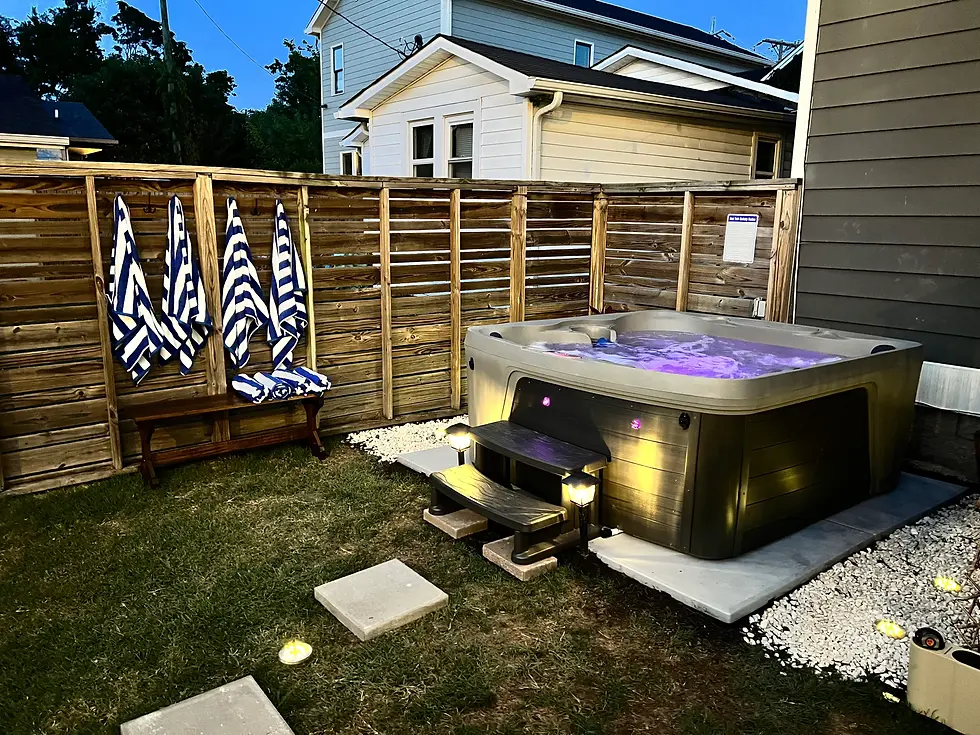
If your day includes a riverfront walk through Cumberland Park and an evening on Broadway, Underwood Manor puts you about five minutes from downtown, close enough to fit both into one easy day without long rideshares. The private hot tub in the backyard is a good way to wind down after all that walking. Check availability here.
Frequently Asked Questions
What is there to do at Cumberland Park?
Cumberland Park offers a children's playground with a mini rock climbing wall, spider climb, and washboard-style play area, along with a riverfront walking trail, an open-air amphitheater, and Alice Aycock's Ghost Ballet sculpture. Most visitors spend 30 to 60 minutes exploring these features, with the riverfront trail offering the park's best downtown skyline views.
How much time do you need at Cumberland Park?
Most visitors need 30 to 45 minutes at Cumberland Park, though families using the playground extensively or walking onto the connecting East Bank Greenway often spend closer to an hour. A quick photo stop can take as little as 15 minutes.
Is Cumberland Gap worth seeing?
Cumberland Gap National Historical Park is a separate destination from Nashville's Cumberland Park, located at the meeting point of Tennessee, Kentucky, and Virginia, and it's generally worth seeing for its hiking trails and historical significance as a frontier passage. It requires a multi-hour drive from Nashville and is better suited to a dedicated day trip than an add-on to a Music City weekend.
Is Cumberland Island worth seeing?
Cumberland Island National Seashore in Georgia is a different destination entirely from Nashville's Cumberland Park, known for its undeveloped beaches, wild horses, and ferry-only access, and it's generally considered worth seeing for travelers specifically planning a coastal Georgia trip. It has no connection to Nashville and requires separate travel planning.
Does Cumberland Park have a splash pad or sprayground?
Cumberland Park historically operated a sprayground from late May to early September, but it has been closed for multiple seasons as of 2026 and isn't expected to reopen soon based on recent visitor reports. Travelers planning a summer visit specifically for water play should check current Metro Parks listings before relying on this feature.
Is parking free at Cumberland Park?
Parking in Cumberland Park's on-site lot is free unless there's a scheduled event, such as an amphitheater show or a Titans game at nearby Nissan Stadium, which can reduce availability. Nearby paid lots are within about a 10-minute walk as a backup option.
Is Cumberland Park dog-friendly?
Yes, Cumberland Park is popular among Nashville dog owners thanks to its open walking paths and riverfront trail. Standard Metro Nashville leash rules apply, so dogs should stay on leash throughout the park.
How do you get to Cumberland Park from downtown Nashville?
The most direct route from downtown is walking across the John Seigenthaler Pedestrian Bridge, a car-free crossing that takes about 10 to 15 minutes and leads directly into the park. Driving is also an option, with a free on-site parking lot available except during scheduled events.
Written by Chase Gillmore, Owner at Underwood Manor
Content powered by inkSTR.co




Comments