Printer's Alley Nashville TN: History, Bars & Visitor Guide


Printer's Alley Nashville TN is a cobblestone entertainment corridor tucked between Union and Church Streets downtown, one block off Broadway, known for neon-lit nightclubs, live music, and a printing-industry history stretching back to the 1820s. Plan on 60 to 90 minutes to walk it, grab a drink, and read a few historical markers.
Location: Printer's Alley sits between 3rd and 4th Avenues North and between Union and Church Streets in downtown Nashville, about a two-minute walk from Broadway.
Historic status: The alley was added to the National Register of Historic Places in 1982 as the Printer's Alley Historic District, covering roughly five acres of buildings dating from 1874 to 1929.
What it's known for: Nightclubs like Skull's Rainbow Room (founded 1948) and Bourbon Street Blues & Boogie Bar, plus neon signage dating back to the 1940s nightclub era.
Best time to visit: Early evening (5 to 7 p.m.) for photos and a quieter first pass, or after 9 p.m. on a Thursday or Friday for live music without Broadway-level crowds.
2026 context: Nashville is projected to welcome 17.8 million visitors in 2026, and downtown's short-term rental market runs around 54% occupancy, so weekend nights in the alley stay busy but rarely feel as packed as Lower Broadway.
Where to stay: Groups touring Printer's Alley and Broadway together do well booking a rental a short drive from downtown rather than paying premium rates to be directly on top of it.
Printer's Alley in 2026 still functions the way it has for decades: a narrower, moodier alternative to the honky-tonk sprawl one block over. If you're mapping out a Nashville weekend that includes both Broadway's big stages and something with more atmosphere and history behind it, this alley belongs on the list. It's not a hidden gem, plenty of locals and tour guides know it well, but it's genuinely less crowded and less touristy than Broadway proper, and that distinction matters for how you plan your night.
This guide covers the alley's printing-industry origins, what's actually there today, how long to budget, and how it fits into a broader downtown itinerary. It also answers the specific questions travelers ask before they go: is it worth the detour, does a print shop still operate there, and what did Taylor Swift once say about the neighborhood. For groups staying at a rental like Underwood Manor, about 7 minutes from Broadway, Printer's Alley is an easy add-on to a night that starts or ends on the main strip.
What Is Printer's Alley in Nashville?
Printer's Alley is a narrow, cobblestone pedestrian corridor in downtown Nashville that runs from Union Street to Commerce Street, sitting between 3rd and 4th Avenues North. The alley earned its name from the print shops, newspaper offices, and publishers that filled the block through the early 20th century, and it's now home to a cluster of nightclubs, bars, and historic commercial buildings.
The district was listed on the National Register of Historic Places in 1982 as the Printer's Alley Historic District. It covers about five acres bounded by Union Street to the north, Third Avenue to the east, Church Street to the south, and Fourth Avenue to the west. Architecturally, the block mixes Italianate, Romanesque Revival, Queen Anne, and Art Deco commercial buildings, several with cast-iron balconies and brick facades that survive from the original construction era between 1874 and 1929.
Specifically, the alley's footprint traces back to 1828, when local landowner George Michael Deaderick carved out a service lane between College Street (now Third Avenue) and Cherry Street (now Fourth Avenue). What started as a horse-hitch and delivery lane behind courthouse-adjacent businesses became, by the 20th century, the physical home of Nashville's two largest newspapers.
Is There Still a Printer's Alley in Nashville?
Yes, the physical alley still exists and is fully walkable in 2026, but no working print shops remain there today. The last operating printer, Ambrose Printing Company, moved out in 1977, ending roughly a century and a half of the alley's association with the printing trade.
At its peak in the mid-20th century, Nashville had more than 36 printing companies citywide, and a significant share of them operated in or immediately around this block. The Nashville Banner and The Tennessean, the city's two largest newspapers for decades, both had operations tied to the alley during its publishing golden age. That history is why the name stuck even after every press and Linotype machine disappeared.
What replaced the printing trade is a nightlife district that took root as early as 1909, when statewide Prohibition pushed drinking underground and speakeasies and jazz clubs began filling the same buildings that once housed publishers. By the 1940s, Printer's Alley had fully transitioned into a nightclub row, and that identity, now with neon signage largely unchanged since that era, is what visitors experience walking through in 2026.
2023 Printers Alley Walking Tour | Nashville, TN | October
Is Printer's Alley Worth Visiting?
Printer's Alley is worth visiting if you want a slower-paced, more atmospheric alternative to Broadway's louder, more crowded honky-tonk strip, especially for a first Nashville trip. It delivers genuine historical texture, live music, and a walkable footprint you can cover in under two hours, without the elbow-to-elbow crowds Broadway sees on weekend nights.
The honest caveat: it's a small footprint. You're not getting Broadway's volume of options, and a few venues lean into a rowdier, later-night crowd that won't suit every traveler. If you're traveling with a group that wants maximum bar variety in a short window, Broadway still wins on sheer numbers. But if your group wants one or two stops with real character and a story behind the neon, Printer's Alley earns its spot.
Specifically, Bourbon Street Blues & Boogie Bar at 220 Printers Alley is a reliable pick for live blues and rock, with a crowd that skews a little older and more music-focused than Broadway's tourist-heavy bars. Skull's Rainbow Room, founded in 1948 at 222 Printers Alley, started as a striptease club and evolved through decades of jazz, burlesque, and rock and roll bookings; it's one of the few venues in downtown Nashville where the building itself is part of the draw. Ghost tour operators, including the Nashville Sites Hidden History and Haunts tour, cover Skull's as a stop specifically because of stories tied to a violent incident from the club's earlier era.
As a result, first-time visitors often get better mileage starting their night in Printer's Alley and finishing on Broadway, rather than the reverse. The alley's smaller scale eases you into downtown Nashville's nightlife before you hit the sensory overload of Lower Broadway's multi-story honky-tonks.

How Long Should I Spend in Printer's Alley?
Budget 60 to 90 minutes for a first walk-through of Printer's Alley, longer if you plan to stop for a full set of live music at one venue. The alley itself is short enough to walk end to end in under five minutes, so your time gets spent inside venues, not covering ground.
A realistic plan for a group: 15 minutes reading the historical markers and photographing the neon signage and cast-iron balconies, then one to two hours settled into a single venue like Bourbon Street Blues & Boogie Bar or Skull's Rainbow Room for a full set. Additionally, if you're doing a guided ghost tour that includes the alley as a stop, expect that portion to run 20 to 30 minutes within a longer 90-minute downtown walking tour.
For groups splitting time between Printer's Alley and Broadway in one night, a two-to-three-hour window covering both is realistic: start in the alley around 7 or 8 p.m., then walk one block over to Broadway (about a two-minute walk) once the crowds there pick up after 9 p.m. This sequencing lets you experience the historic district's quieter character before Broadway's later, louder peak hours.
What Is Taylor Swift's Favorite Place in Nashville?
Public reporting on Taylor Swift's specific favorite Nashville spots is limited and largely anecdotal, so treat any single claim with caution rather than as settled fact. What's well documented is that Swift's career launched in Nashville's Music Row and downtown songwriter-round scene in the mid-2000s, and she's spoken publicly and often about her connection to the city's music community broadly.
Rather than chase an unverified "favorite spot" claim, a more useful frame for travelers is this: Nashville's songwriter culture, the same ecosystem that shaped Swift's early career, is genuinely present in venues around downtown and in neighborhoods like The Gulch and 12 South, both a short drive from Printer's Alley. The best live music venues in Nashville often include smaller rooms where the writer-performer tradition Swift came up through is still visible on any given night.
If you want a specific, verifiable Nashville landmark tied to the broader country and songwriting tradition Swift is part of, the Country Music Hall of Fame and the Ryman Auditorium, about a 7 to 8 minute walk or drive from Printer's Alley, are both documented, historically significant stops with confirmed programming you can check directly.
What's the Historical Backstory Competitors Skip?
The deeper story of Printer's Alley is a three-act transformation: publishing hub, speakeasy district, nightclub row, and most generic travel guides only tell you the last act. Understanding all three explains why the block looks and feels the way it does today, and why locals still consider it worth a stop despite its small size.
Act one runs from 1828 through the early 1900s. Deaderick's original service lane slowly filled in with commercial buildings as downtown Nashville grew around it. By the turn of the century, the alley had become the physical center of the city's print trade, hosting ten print shops and thirteen publishers at its peak, including offices tied to both The Tennessean and The Nashville Banner.
Act two begins in 1909, when Tennessee's statewide Prohibition law forced drinking underground years before national Prohibition existed. Speakeasies and jazz clubs began operating quietly in the same buildings that housed legitimate print businesses by day. This is also the period that cemented the block's nickname, the Men's Quarter, tied to nearby Fourth Avenue's concentration of saloons, billiard halls, tobacconists, barber shops, and bath houses that catered almost exclusively to men.
Act three arrives in the 1940s, when the speakeasy-era clubs formalized into the nightclub district visible today. Skull's Rainbow Room opened in 1948 as part of this wave. The neon signage that photographers love now, the marquees and hand-painted bar signs, largely dates to this same decade. By the 1960s, printing still coexisted with nightlife, with more than 36 printing companies operating citywide, but the alley's identity had already shifted toward entertainment. The last press left in 1977, closing the loop entirely.
What most competitor articles miss is the accessibility and logistics layer. The alley's cobblestones are uneven in places, which matters for visitors using mobility devices, strollers, or anyone unsteady on foot, especially after dark when lighting along the side lanes is dimmer than the main stretch. If accessibility is a concern for your group, stick to the main corridor between Union and Church, which is better lit and more evenly paved than the side alleys.
Daytime use is also underdiscussed. Most guides frame Printer's Alley purely as a nighttime destination, but the historic building facades, the cast-iron balconies, and the neoclassical and Art Deco details on structures like the 1929 U.S. Bank Building and the 1891 Utopia Hotel are genuinely worth a daytime photo walk when the alley is nearly empty and the architecture gets better light. Pair it with a stop at the Tennessean's archived coverage of the alley's history if you want deeper reading before you go.

How Does Printer's Alley Compare to Broadway?
Printer's Alley offers a smaller, quieter, more historically grounded experience than Broadway, while Broadway delivers far more volume in bars, live music stages, and crowd energy. Choosing between them depends on what your group wants out of a given night, and most first-time visitors are best served by doing both in sequence rather than picking one over the other.
Factor | Printer's Alley | Broadway |
Distance from downtown core | One block off Broadway, about a 2-minute walk | Central Lower Broadway strip |
Crowd size on weekends | Moderate, manageable | Heavy, especially after 8 p.m. |
Noise level | Lower, contained to individual venues | High, multiple stages bleed into the street |
Historic character | National Register district, buildings from 1874-1929 | Mix of historic and modern facades |
Best for | A quieter first stop, history buffs, ghost tour fans | Multi-bar hopping, big group energy |
Cover charges | Varies by venue, often lower or none on weeknights | Varies widely, more cover charges on peak weekends |
For a group staying at a rental home rather than a downtown hotel, this comparison matters for planning your Uber or rideshare timing. Groups based at Underwood Manor, about 7 to 9 minutes from Broadway by car, typically head downtown once and cover both Printer's Alley and Broadway in the same outing rather than making two separate trips.
Where Should You Stay for a Printer's Alley and Broadway Night Out?
The best home base for a Printer's Alley and Broadway night is a rental close enough for a quick rideshare but private enough that your group can regroup, change, or wind down without checking back into a hotel lobby. For groups of six or more, a full house with its own entertainment space consistently beats splitting a hotel block.
Underwood Manor is a rustic modern farmhouse in Nashville sleeping up to 10 guests across 3 bedrooms and 2.5 bathrooms, roughly 7 minutes to Broadway and 5 minutes to downtown. The property has built its reputation on groups doing exactly this kind of night out. One recent guest, Megan, wrote about her four-night bachelorette stay: "The location is 10 min from everything like Broadway making it a central spot to stay at!" That kind of feedback is common in the property's guest reviews, and it reflects the practical reality of basing a Printer's Alley and Broadway crawl from a rental rather than a downtown hotel with resort fees.
What makes Underwood Manor specifically useful for this itinerary is the pre-game and post-night-out setup. Before heading downtown, groups gather in the speakeasy game room, a converted garage space with an 8-foot slate pool table, dartboard, custom whiskey barrel bar, and a neon sign reading "Blame it on my roots, I showed up in boots," a design choice that mirrors the same neon-and-nightclub aesthetic you'll see in Printer's Alley itself. After the bars close, the 7-person hot tub and SoloStove smokeless fire pit in the private backyard give the group somewhere to decompress instead of ending the night in a hotel elevator.
If your group is closer to 10 to 12 people, Fern Unit A sleeps 12 across 4 bedrooms with its own rooftop deck and Nashville skyline mural, sitting 7 to 10 minutes from Broadway. Larger celebration groups combining a bachelorette and bachelor party in one weekend should look at the Ultimate Bach Pad, two side-by-side duplex homes sleeping up to 24 guests with two rooftop decks and three game rooms between them, about 8 to 10 minutes from Broadway. For groups who'd rather walk to Printer's Alley and Broadway directly, Luxe Cowgirl sits just 3 blocks from Broadway with a saltwater pool and sleeps up to 8, though it trades a private backyard for walkability. Whichever fits your group, direct booking through each property's own site typically avoids the added service fees that stack up on third-party platforms.
Before finalizing your Nashville bachelorette party plans or a birthday weekend, check our things to do in Nashville guide for how Printer's Alley fits alongside other downtown stops like the Country Music Hall of Fame and the Gulch's restaurant scene.
What Should You Know Before Visiting Printer's Alley?
Visiting Printer's Alley works best when you plan for cash on hand at a few venues, comfortable shoes for cobblestones, and a realistic expectation that this is a small, specific stop rather than an all-night destination. A little preparation goes further here than on Broadway, where volume covers for a lack of planning.
Check cover charges before you go. Cover charges at venues like Bourbon Street Blues & Boogie Bar and Skull's Rainbow Room vary by night and by act, and weekends typically run higher than weeknights.
Wear flat, closed-toe shoes. The cobblestone surface is uneven in spots, and it gets slicker after rain. This matters especially for bachelorette groups planning to wear heels for photos; bring a pair to change into for the walk itself.
Go early for photos, go later for music. The neon signage photographs best around dusk, before full darkness, while the live music picks up after 9 p.m. on weekends.
Budget realistic rideshare costs. Weekend night surge pricing on Uber and Lyft near downtown Nashville can spike fast after bar close, roughly 1 to 2 a.m., so build in extra time and budget if your group is heading back to a rental outside downtown.
Some venues are cash-only or cash-preferred for cover charges, even if the bar itself takes cards. Carry small bills to avoid a slow ATM line at the door.
If mobility is a concern, stick to the main paved corridor between Union and Church Streets rather than the narrower side lanes, which have less consistent lighting after dark.
What Mistakes Do First-Time Visitors Make?
The most common mistake is treating Printer's Alley as a full night's entertainment rather than a 60 to 90 minute stop within a longer downtown plan. Because the alley is short, some groups linger outside taking photos and never actually go into a venue, missing the live music and history that make the stop worthwhile in the first place.
A second mistake: skipping it entirely because it's "just an alley." That undersells a National Register historic district with buildings dating to 1874 and a genuinely different atmosphere than Broadway's larger, brighter honky-tonks. Notably, several ghost tour operators build entire routes around Printer's Alley specifically because of its documented dark history, so travelers interested in that angle should not skip it in favor of Broadway alone.
A third mistake is arriving without a plan for after. If your group finishes at Printer's Alley or Broadway near closing time, decide in advance whether you're heading back to a rental like Underwood Manor for a fire pit nightcap or continuing the night elsewhere. Deciding this ahead of time avoids a group of ten standing on a downtown sidewalk at 1:30 a.m. trying to agree on next steps.
Practical Guidance: Planning Your Visit Around Nashville's 2026 Crowds
Nashville's tourism numbers give useful context for timing your Printer's Alley visit. The city welcomed 17.8 million visitors in 2026, with 11.8 million classified as overnight guests, according to Metro Tourism and Convention Commission figures. That volume concentrates heavily around downtown, Broadway, and adjacent districts like Printer's Alley on weekend nights and during major events.
As a result, weeknight visits, particularly Tuesday through Thursday, give you a noticeably quieter version of the alley with shorter waits and easier parking. If your trip lines up with a major event like CMA Fest, expect downtown crowds and short-term rental occupancy to spike significantly; GoodnightStay Blog data shows Nashville short-term rental occupancy jumped to 67.7% during CMA Fest 2026, up from 64.6% the year before. Book lodging 4 to 6 months ahead if your visit overlaps a major festival week.
For everyday weekend visits outside major events, Nashville's broader short-term rental occupancy sits around 54% over the trailing twelve months as of 2026, per AirDNA. That means solid but not desperate availability most weekends, giving groups reasonable flexibility to book a few weeks out rather than months in advance for a standard trip.
Frequently Asked Questions
Is Printer's Alley worth visiting on a first trip to Nashville?
Yes, especially if you want a quieter, more historically grounded stop before or after Broadway. Budget 60 to 90 minutes, and go early for photos of the neon signage or after 9 p.m. for live music at venues like Bourbon Street Blues & Boogie Bar.
Is there still a working print shop in Printer's Alley?
No. The last operating printer, Ambrose Printing Company, moved out in 1977, ending the alley's long association with the printing trade. The name and the historic buildings remain, but the block is now a nightlife and entertainment district.
How long should I spend in Printer's Alley?
Plan for 60 to 90 minutes for a first visit, longer if you settle in for a full live music set. The alley itself is short enough to walk end to end in under five minutes, so most of your time is spent inside a venue.
What is Taylor Swift's favorite place in Nashville?
There's no well-documented, specific answer to this, and most claims online are unverified. What is well established is that Swift's early career grew out of Nashville's songwriter and Music Row scene, an ecosystem still visible in downtown venues and neighborhoods like 12 South and The Gulch.
How far is Printer's Alley from Broadway?
Printer's Alley is about a two-minute walk, roughly one block, from Broadway in downtown Nashville. Many first-time visitors start their night in the alley and finish on Broadway once the crowds pick up later in the evening.
Is Printer's Alley safe at night?
The main corridor between Union and Church Streets is well lit and sees consistent foot traffic on weekend nights, which supports a reasonably safe environment for groups. The narrower side lanes have less consistent lighting, so groups with mobility concerns or anyone uneasy after dark should stick to the main stretch.
Does Underwood Manor allow bachelorette parties heading to downtown Nashville venues like Printer's Alley?
Yes, bachelorette groups are one of Underwood Manor's core guest types. The property sleeps up to 10 guests and sits roughly 7 minutes from Broadway and 5 minutes from downtown, making a Printer's Alley and Broadway night out an easy add-on without a long rideshare.
What's the difference between Printer's Alley and the Broadway honky-tonks?
Printer's Alley is smaller, quieter, and rooted in a documented history as a former printing and Prohibition-era speakeasy district, while Broadway offers far more bars, live stages, and crowd volume. Groups wanting variety and energy should prioritize Broadway; groups wanting atmosphere and history should not skip Printer's Alley.
Final Take on Printer's Alley Nashville TN
Printer's Alley earns its spot on a downtown Nashville itinerary because it delivers something Broadway can't: a genuine, National Register-listed history stretching from an 1828 service lane to a 1940s nightclub row, packed into a walk that takes less than five minutes end to end. Budget 60 to 90 minutes, go for the neon at dusk or the live music after 9 p.m., and pair it with a stop on Broadway one block away.
As Nashville's visitor numbers climb toward a projected 17.8 million in 2026, the smaller footprint of Printer's Alley remains one of downtown's better options for groups who want atmosphere without Broadway's full crowd load. Whether you're planning a bachelorette weekend, a birthday trip, or a first visit built around country music history, this alley is worth the two-minute walk off the main strip.
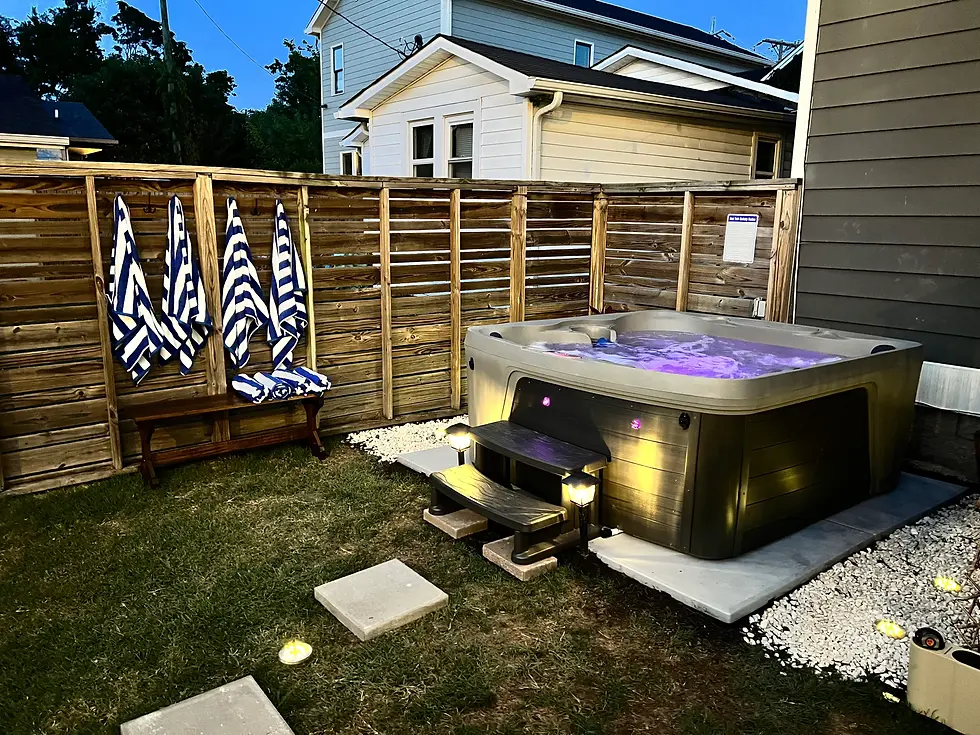
If your group is planning a night that covers Printer's Alley and Broadway, Underwood Manor's private backyard, complete with a 7-person hot tub and SoloStove fire pit, makes for the kind of post-downtown wind-down a hotel room can't match. Check availability at Underwood Manor for your next Nashville trip.
Written by Chase Gillmore, Owner at Underwood Manor
Content powered by inkSTR.co


Comments